China’s best solar batteries can deliver dependable backup power when they receive consistent, careful attention. However, “best” depends on chemistry, climate, storage capacity, and daily energy demand. A lithium iron phosphate battery may suit a modern home, while a lead-acid system may require more frequent checks.
This guide explains how to maintain solar energy batteries safely and effectively. It covers inspection routines, charging habits, temperature control, terminal care, and performance monitoring. A clean battery enclosure matters. Dust, moisture, and poor ventilation can gradually affect reliability. Check the display or monitoring app for unusual voltage, temperature, or charging patterns. Small changes often reveal larger problems.
Details matter.
Use the battery manufacturer’s instructions as the primary reference. Different systems have different voltage limits, maintenance intervals, and protection settings. Never open a sealed battery or bypass its safety controls. For flooded lead-acid batteries, trained users should check electrolyte levels and use proper protective equipment. Lithium batteries usually need less physical maintenance, but they still require safe temperatures and compatible chargers.
Even experienced owners can overlook simple issues. I have seen maintenance plans fail because inspections were recorded but never reviewed. A monthly reminder is useful, yet seasonal checks are also necessary. Winter cold, summer heat, and long periods without use can change battery behavior. If the battery swells, leaks, smells unusual, or becomes excessively hot, stop using it and contact a qualified technician. Careful maintenance protects the battery, the solar system, and the people using it.
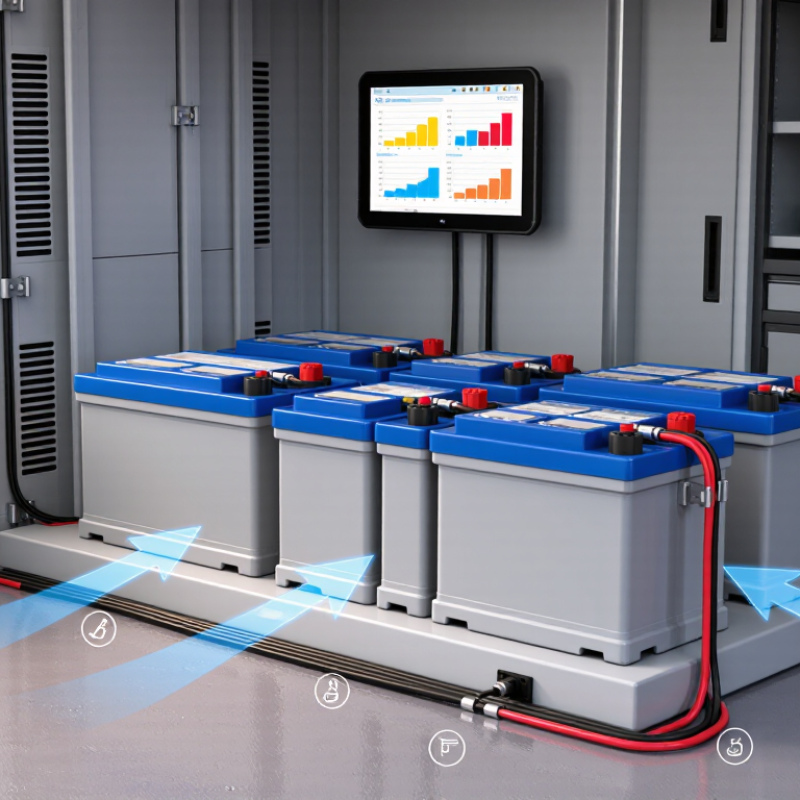
China’s Best Solar Batteries: How to Maintain Them?
China’s solar-storage market mainly uses lithium iron phosphate, lead-acid, flow, and emerging sodium-ion batteries. Lithium iron phosphate cells dominate new systems because they offer strong thermal stability and long cycle life. The China Energy Storage Alliance reported 21.5 GW of new energy-storage capacity commissioned in 2023. Lithium-ion systems represented most of that expansion.
Lead-acid batteries remain practical for small rural installations. They cost less initially, but need ventilation, terminal cleaning, and regular electrolyte checks when applicable. Lithium systems usually require less routine work. Keep them shaded, dry, and away from salt mist. A stable room temperature near 15–30°C helps, although the installation manual must control the final limits.
Flow batteries suit larger projects with frequent cycling. Their electrolyte tanks need leak checks, pump inspections, and level monitoring. Sodium-ion batteries are gaining attention in China, but field experience is still developing. Maintenance procedures should not be copied blindly from lithium systems. That is a common mistake.
Check cable torque and corrosion every three to six months. Record voltage, temperature, alarms, and state of charge. The International Energy Agency notes that battery performance depends strongly on operating conditions, not only chemistry. Avoid keeping lithium batteries fully charged for long periods. Yet fixed storage sites may require different settings. I still find generic advice too confident. Local heat, dust, and poor ventilation can change the result. When readings drift, qualified technicians should test the battery-management system and protection devices.
| Battery Type | Typical Chemistry | Common Solar-Storage Use in China | Typical Usable Depth of Discharge | Expected Cycle Life* | Maintenance Requirements | Main Advantages | Important Limitations |
|---|---|---|---|---|---|---|---|
| Lithium Iron Phosphate (LFP) | LiFePO4 lithium-ion | Residential energy storage, commercial and industrial storage, microgrids, and solar-plus-storage systems | 80%–95% | Approximately 3,000–8,000 cycles, depending on operating conditions and cell quality | Keep the battery within the manufacturer’s temperature range; inspect cables and terminals; keep the battery-management-system firmware updated; avoid prolonged operation at 0% or 100% state of charge. | High thermal stability, long service life, good usable capacity, low routine maintenance, and strong suitability for frequent daily cycling | Higher initial cost than lead-acid batteries; charging below 0°C generally requires protection or temperature control. |
| Lithium Nickel Manganese Cobalt Oxide (NMC) | LiNiMnCoO2 lithium-ion | Some compact residential systems, mobile or space-constrained applications, and selected integrated energy-storage products | 80%–90% | Approximately 1,500–4,000 cycles, depending on charge rate, temperature, and operating window | Use an approved battery-management system; prevent overheating; maintain ventilation; do not use damaged or swollen modules; follow the specified charge and discharge limits. | High energy density and relatively compact size | Generally lower thermal stability and cycle life than LFP; temperature control and protection are especially important. |
| Valve-Regulated Lead-Acid (VRLA) | Sealed lead-acid, including AGM and GEL | Backup power, small off-grid solar systems, telecommunications support, and cost-sensitive installations | 50%–70% | Approximately 500–1,500 cycles, strongly affected by depth of discharge and temperature | Keep the battery room cool and ventilated; inspect terminals for corrosion; check for swelling or leakage; use the correct float and absorption-voltage settings; avoid repeated deep discharges. | Lower upfront cost, established technology, and straightforward system integration | Heavy, lower energy density, shorter cycle life, slower charging, and reduced capacity at high discharge rates |
| Flooded Lead-Acid | Vented lead-acid | Some off-grid, rural, and larger stationary systems where regular servicing is practical | Approximately 50% | Approximately 800–2,000 cycles with proper operation and maintenance | Check electrolyte level regularly and add distilled water when required; clean corrosion; ensure adequate ventilation; keep sparks and open flames away; equalize only when permitted by the manufacturer. | Proven technology, relatively low purchase cost, and tolerance of some operating abuse | Requires regular maintenance, produces hydrogen during charging, occupies more space, and has lower usable energy than lithium batteries. |
| Sodium-Ion | Sodium-ion battery chemistry | Emerging residential, low-temperature, and stationary energy-storage applications | Approximately 80%–90% | Often reported at approximately 2,000–6,000 cycles, depending on the cell design and operating conditions | Follow the battery-management-system limits; protect the enclosure from moisture and dust; monitor temperature, state of charge, and abnormal voltage differences between cells. | Uses more abundant sodium-based materials, offers good low-temperature potential, and can reduce reliance on lithium-based materials | Lower commercial maturity and generally lower energy density than leading LFP systems; actual performance varies considerably by product design. |
| Battery Maintenance Schedule | Applies to most solar-storage systems | Residential, commercial, industrial, and off-grid installations | Keep the normal operating window recommended by the manufacturer | Cycle life decreases with high temperature, deep discharge, excessive charging current, and long periods at full charge | Monthly: inspect the enclosure, cables, terminals, ventilation, alarms, and visible damage. Every 3–6 months: review system logs, temperature records, state-of-charge trends, and abnormal voltage differences. Annually: arrange qualified electrical inspection and verify protective devices. | Early detection of overheating, loose connections, corrosion, water ingress, and abnormal battery behavior | Maintenance intervals must be adjusted according to the battery type, installation environment, local electrical requirements, and manufacturer’s instructions. |
| Best Practices for Longer Service Life | System-level operating guidance | All solar battery technologies | Use a moderate daily operating window instead of frequent maximum-depth discharge when the system design allows it | Operate within the rated current, voltage, and temperature limits | Install the battery in a dry, clean, shaded, and adequately ventilated location; keep combustible materials away; use compatible chargers and inverters; never open a lithium battery enclosure without qualified authorization. | Improves safety, preserves usable capacity, and helps reduce premature replacement | Actual results depend on cell quality, system sizing, climate, charging strategy, maintenance, and installation workmanship. |
*Cycle-life figures are indicative industry ranges rather than guarantees. Actual service life depends on temperature, charge and discharge current, depth of discharge, state-of-charge limits, installation quality, and maintenance practices.
Common types include lithium iron phosphate, lead-acid, flow, and sodium-ion batteries. Lithium iron phosphate systems dominate many new installations. Lead-acid remains useful for small rural systems. Flow batteries fit large projects with frequent cycling. Sodium-ion technology is developing, so maintenance guidance may change.
Keep it in a dry, shaded, and ventilated area. Avoid direct sunlight, flooding, salt mist, and nearby heat sources. The mounting surface must be strong and noncombustible. Leave working space around the enclosure. Follow the equipment manual and local electrical requirements.
Inspect cable torque and corrosion every three to six months. Check terminals, conduits, glands, and grounding points. Look for water entry or sharp edges. Record torque values and inspection dates. Small details matter.
No. Lead-acid batteries may need ventilation, terminal cleaning, and electrolyte checks. Flow batteries need tank, pump, leak, and fluid-level inspections. Lithium systems usually need less routine work. Sodium-ion maintenance should not be copied from lithium systems without confirmation.
Confirm polarity, cable size, terminal torque, grounding, and overcurrent protection. Check disconnects and emergency shutdown functions. Inspect conduits for damage and moisture. Label isolation switches clearly. A normal voltage reading does not prove safe installation.
Watch for sudden charge-level jumps, overnight voltage loss, repeated alarms, swelling, corrosion, or unusual heat. Burning smells and leakage require immediate isolation. Do not open a sealed battery pack. Seek qualified service promptly.
Record monthly voltage, temperature, capacity, alarms, and state of charge. Compare real performance with the original specification. Do not rely only on a phone application. A clean dashboard can hide one weak cell. I may be too cautious, but missing trends can become expensive.
Replacement may be reasonable when measured capacity remains below the approved threshold. Frequent shutdowns or rising repair costs also matter. The 80% capacity rule is useful, but not absolute. Service life depends on heat, dust, cycling, and ventilation. Fifteen years is an estimate, not a promise.
Choosing and caring for the right solar battery is essential for a reliable and safe energy system. Common options in China include lead-acid, lithium-ion, and other advanced storage technologies, each offering different advantages in cost, lifespan, capacity, and maintenance needs. The best choice depends on your electricity demand, climate, available installation space, budget, and backup requirements. Before installation, check ventilation, wiring, polarity, mounting stability, protective devices, and compatibility with the inverter and charge controller.
Learning how to maintain solar energy batteries can significantly improve performance and service life. Inspect terminals, cables, casing, and charge levels regularly, while keeping the battery area clean, dry, and within the recommended temperature range. Seasonal checks should include reviewing storage capacity and adjusting system settings when necessary. Swelling, leakage, unusual heat, corrosion, reduced backup time, or repeated charging problems may indicate a fault. Troubleshoot safely according to the system instructions, and arrange professional replacement when the battery reaches the end of its useful life or shows serious damage.

 Suntherra Battery